


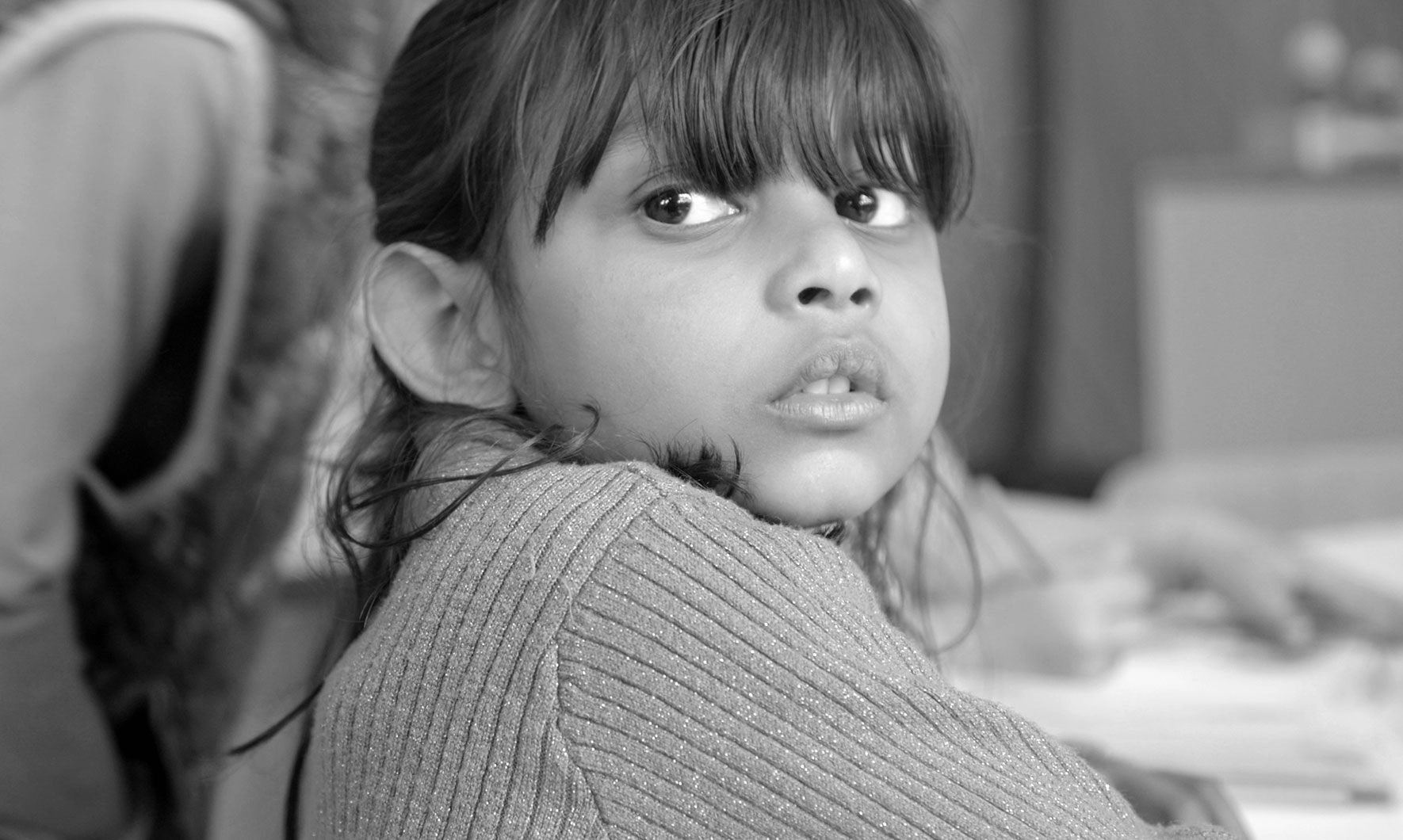
PISACANE, the children are arriving
“By the time they arrived in Rome, completely exhausted, hungry, barefoot, worse off than gypsies, they were herded together with other displaced people into a school in Maranella, the Michelazzi School, which, after Fascism, was renamed the Pisacane School.”
— Pier Paolo Pasolini, A Violent Life (Una vita violenta)
From a Fascist school to the school with the highest number of foreign students in Italy, Rome’s Pisacane School has become a pioneer of a new approach to education, one based on the coexistence of many different cultures. After experiencing years of “ghettoisation” in the early 2000s, today it is witnessing a surge in enrolments, bringing both foreign and Italian children back into its classrooms.
In 1939, the first wing of a school was inaugurated in Rome: the Royal Luigi Michelazzi Elementary School (Regia Scuola Elementare Luigi Michelazzi).
In 1941, construction was completed, and the institute’s north wing was also handed over. The school covered more than 4,000 square metres. Four thousand square metres in the Roman countryside. At the time, the surrounding area was, quite literally, farmland.
It was a stronghold of the regime’s ideology on the eastern outskirts of the capital. The nearby Impero Cinema, built around the same time, served as its counterpart, amplifying the principles of supremacy that the regime sought to instil in the hearts of children on one side of the street and adults on the other.
We already know how it all ended. But the school, of course, remained right where it was.
Its name was changed because Michelazzi had been a hero of the African wars. The school was therefore renamed after Carlo Pisacane. In the early 2000s, in response to the massive influx of migrants into Torpignattara, the neighbourhood where the school is located, Pisacane became the school with the highest number of students of foreign origin in Italy. In a class of 25, only one girl was of Caucasian, that is, white, ethnicity. She was the only one who spoke Italian.
We were supposed to build an Empire, and evidently we failed. We were supposed to be the colonisers, but we ended up becoming the colonised. In this school, History has undergone such a complete reversal that it would once have been impossible even to imagine.
The story of Pisacane could end here. The narrative arc is complete; the hero, Pisacane, has completed his journey. And yet, the most incredible part came afterwards. Thanks to the work carried out by parents, teachers, girls and boys, Pisacane School is now reclaiming all its spaces, all its classrooms, opening a new class group every year.
Genre
Documentary
Directed by
Marina Zucchelli e Riccardo Russo
Year
2026
Duration
70 ′
Language
Italian
ARCHIVE PRODUCER
Esplorare la metropoli
Film Editor
Renata Salvatore
SOUND DESIGN
Bertrand Chaumeton
Date
14 November 2026
You may also like this


